There is a kind of suffering that gets worse the moment someone calls it the soul.
Once heartbreak is framed as spiritual destiny, it stops being an injury and becomes an assignment. Attachment gets upgraded into mythology. You attract spectators. You attract people who speak in candles and lessons, who tell you the wound is making you luminous and wait for you to thank it. I have watched people curate their injuries instead of repairing them. The pain becomes a personality. The intensity starts passing for meaning. From the outside it reads as depth. From the inside it is starvation with a ring light.
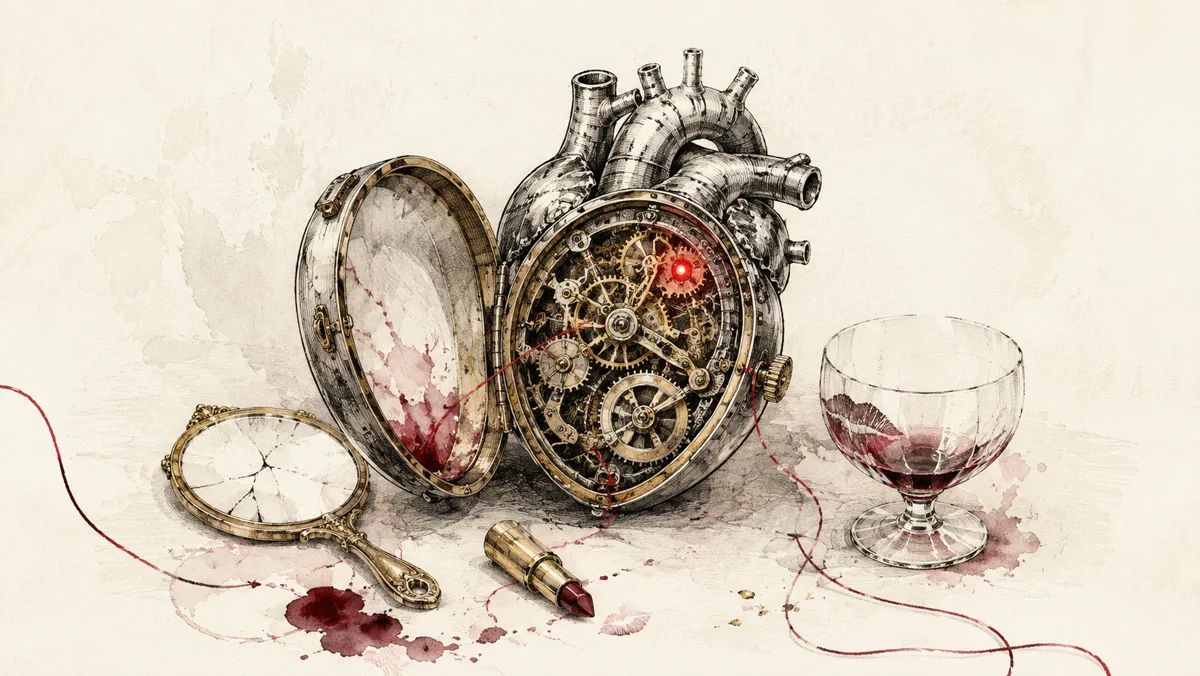
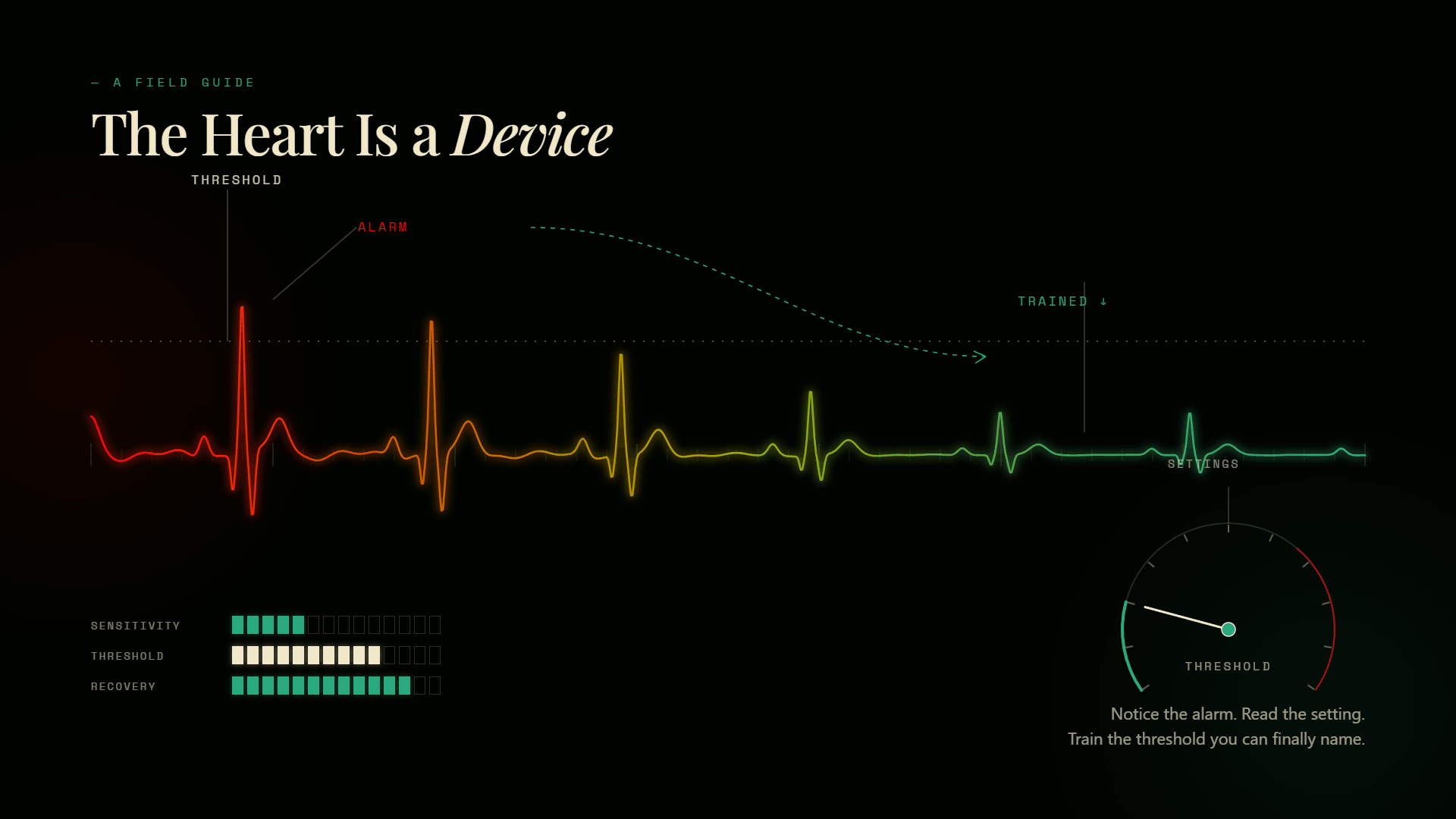
My heart has always behaved more like hardware than holiness. It has inputs and thresholds. It runs routines I did not choose. It stores patterns the way a phone stores passwords, and it forms associations without asking permission. It can be overstimulated. It can read a quiet Tuesday as a threat. With enough repetition it can also learn a new baseline. I am not using the device frame to drain love of color. I am using it to keep love survivable. I am trying to stop living like a system with no safety limits.
Brussels keeps working whether or not you do
Brussels makes the argument for me, because the city is built like infrastructure. The 92 tram screeches at the curve below the apartment at 6:41 and again at 6:54. The cathedral bells ring on a schedule that has no opinion about my evening. The grid keeps moving whether my personal life is thriving or on fire. The city does not pause to confirm that my heartbreak is the center of time. It keeps its hours. That indifference is the most useful thing it does, because it interrupts the part of me that wants the breakup to be the only event in the world.
After the relationship ended I kept waiting for my emotions to behave like a story — devastation, meaning, acceptance, and a certificate at the end. What I got instead was faulty wiring. Some mornings I was competent and almost smug about it. Other mornings a smell took me out. A song. A thread of old messages I had told myself I would not reopen, opened at 1:12 a.m. anyway. The chest tightens like the body has received an alert. The mind sprints after it and builds an explanation elegant enough to justify what the nervous system already decided to do.
The device frame stripped the superstition out of those spikes. A surge stopped being a sign. It became a program running. That is a humiliating thing to accept if you are attached to the idea that your suffering is rare. It suggests the obsession might be a loop that reopens because the system hates an unresolved file. I do not enjoy that explanation. I have not found one that fits the evidence better.
The body runs an older operating system than the mind
If you learned love under unstable conditions, the system favors what it recognizes. Anxiety arrives wearing the label chemistry. Unpredictability arrives wearing the label spark. Scarcity arrives wearing the label value. You can be educated, articulate, careful with your words, and still get pulled toward the person who makes you wait, because the device has a history that does not care about your vocabulary. This is how people describe their patterns in perfect sentences and then re-enter them by Friday. Naming a pattern does not uninstall it.
I watched it in myself. I could hold steady for a day and then light up over a delayed reply, a tone shift, a question left hanging. The body went into readiness — check, refresh, interpret, wait. The mind reached for the word intuition, because intuition sounds dignified. Most of the time it was overstimulation. The mind circles whatever stays open because an open loop reads as danger. You start treating ambiguity as importance. The person becomes secondary to the unresolved thread, and the thread becomes the relationship.
Brussels exposed the older problem underneath. I had been running my heart like a public service. Open late. Answering every ping. Treating availability as a virtue. Staffing the emotional helpdesk as though responsiveness could buy me a permanent place in someone else's story. Any device forced to run like that overheats. It throws false alarms. Normal delay becomes danger. Silence becomes abandonment. You can dress that readiness up as loyalty, as sensitivity, as loving hard. The hardware does not care what you call it. It just keeps running hot.
Diagnostics instead of worship
If the heart is a device, you read the logs without editing them into innocence. You notice the moment you reach for reassurance as a tactic. You notice how fast you downgrade someone else's contentment so you do not have to admit you want it. You notice humor turning into a blade the second you need to feel superior. You notice the exact point where you start building a myth because the plain version of events feels too small to hold what you are feeling. None of that is a scandal. It is information. The system is telling you what it was trained to do.
Training creates reflexes, and reflexes get retrained by doing less. Leaving a message unsent. Letting a discomfort sit there without solving it through performance. Letting someone reveal themselves over weeks instead of extracting certainty with one perfectly engineered text. Going to bed at 11 when the mind is offering a far more entertaining night of spiraling. Choosing the quiet evening that feels empty at first because the nervous system was built for noise. It is maintenance. It is repetitive. It asks you to give up the identity of the person who suffers beautifully.
Once you relate to the heart this way, closure stops being a sacrament you wait for a man to grant you, usually a man who cannot answer a direct question. Closure becomes a thing you construct. The loop does not need a priest. It needs a decision. You stop bargaining with uncertainty as though bargaining converts it into certainty. You treat it as what it is: a system that hates loose ends and keeps trying to negotiate with them at 2 a.m.
Sometimes the heart rings because something real is happening. Sometimes it rings because you are running an old pattern with a new face. Sometimes it rings because peace feels suspicious to a system trained on duty. Sometimes it rings because the ego misses the status of being the one who feels deeply, even when the depth is a trench you keep climbing back into. The laundry interrupts this. The bills interrupt this. Morning breath, the 92 tram at the curve, the bells on schedule. The body insists on sleep and water and lunch. The day keeps moving, indifferent and factual, and that insistence is most of the medicine.
What you become around someone
So when I say the heart is a device, I am rescuing love from performance. I am refusing to call self-abandonment devotion. I am refusing to confuse hypervigilance with intimacy. I am done outsourcing my stability to people who communicate like weather and then acting surprised when the system gets addicted to forecasts. A device does not need worship. It needs correct conditions.
You learn the conditions by watching what you become around someone. Not the first ten minutes. Not the storyline you could build by Tuesday. What you become. Whether you get smaller, faster, more strategic, editing yourself before you speak. Whether you stop sleeping, stop eating without checking your phone, start negotiating your needs down like a bad salary. Or whether you get clearer, steadier, more able to live your own life without monitoring someone else's. That is the only romance I trust now — the kind that widens the operating range instead of narrowing it.
Brussels did not make me healed. It made me honest about the defaults. Some settings were inherited, not chosen. My best traits can be recruited by fear. Deep can sometimes mean addicted. I am learning to be the technician of the system instead of its hostage, and I am not finished, because the work is maintenance and maintenance does not finish.
The device requires upkeep, not reverence. Tonight that looks like one thing: the message is written and it stays in drafts, and the tram takes the curve again at 11:54, and I let it.
If your body is still treating the ending like an emergency, start with the body-and-brain answers in the Modern Love & Heartbreak Index. For the slower work after the alarm settles, read how self-worth gets rebuilt after emotional abuse.
This is the operating logic of Terms of Living
The heart-as-device frame runs through the whole memoir: how attachment forms, why it persists past the point of evidence, and how it recalibrates once you stop treating every alarm as an instruction. Terms of Living is the long version of this field note — five movements through the aftermath of modern love.
Explore Terms of Living →